Most of the cities have established requirements for new construction to feature EV Ready parking.
目前大温很多城市对新建公寓楼都要求100%配备EV parking,以应对即将来临的EV车大潮。

那么不同的充电方式多久才能把车冲足电呢?

Most of the cities have established requirements for new construction to feature EV Ready parking.
目前大温很多城市对新建公寓楼都要求100%配备EV parking,以应对即将来临的EV车大潮。
那么不同的充电方式多久才能把车冲足电呢?
For the last five years, there has been an incessant whisper at the margins of the real estate industry that has kept the idea of crashing markets and popped real estate bubbles in the public consciousness. Overextended buyers, overheated markets, overpriced properties – the reasons for anxiety are real.
Who would have thought that everything would one day come to a screeching halt because of condo insurance?
That is the scenario facing British Columbia, where insurance rates for strata corporations have risen beyond what most can afford to pay.
No lender will finance the purchase of a property lacking insurance, meaning units in uninsured buildings will have to fine either cash buyers or no buyers at all. Condo towers, because of their size and the potential for widespread damage, will be hit especially hard.
The issue first arose in the fall of 2019, when murmurs of the insurance increases were making their way around the province’s real estate industry.
“Back then, I don’t think it was on too many people’s radar,” says investor and Pemberton Homes agent Vanessa Roman. “It’s now on everybody’s radar because more and more buildings have had their insurance come up for renewal. I would say there isn’t a strata corp in BC that isn’t aware of the potential problem.”
According to Darlene Hyde, CEO of the British Columbia Real Estate Association, the scope of the problem remains hard to gauge.
“It’s like the nose of the camel is coming into the tent,” Hyde says. “We don’t know how big this is going to be. We don’t know how much premiums are going to go up. We’ve heard some individual, anecdotal stories that are pretty scary.”
One such story involves a property in Abbotsford where Roman says an unfortunate strata corporation saw its premiums rise by 700 percent.
“Last year, their premiums were $66,000. This year, they’re $588,000 – just for the premium,” she says.
Why are condo insurance rates rising in BC?
When asking about the root of the issue, the phrase “a perfect storm” frequently pops up. There are multiple reasons behind the spike in insurance rates. Any one of them would be relatively innocuous on its own, like a sliver of light underneath your bedroom door at night. But taken on simultaneously, these factors combine to form an eye-melting flash of lightning that has the potential to set the roof on fire.
Part of the blame can be laid on the strata corporations themselves. In an attempt to attract tenants, many stratas have cut their monthly maintenance fees to paltry levels, resulting in empty coffers when the time comes for major cash outlays, like sudden insurance rate hikes.
Roman says many strata corporations have also tried to keep their own costs low by opting to get insurance from companies offering the lowest rates. These companies, operating in a highly competitive environment, have suppressed normal rate increases for years in an attempt to nab and keep stratas as clients.
“So everybody wants to pay nothing for this strata,” she says. “When you have people on strata councils saying, ‘Okay, we can go with this insurance provider, or this one, which is 20 percent more but gives us more coverage,’ everyone is like, ‘Let’s go with the cheaper one. And by the way, we don’t want our rates to go up either.’”
The insurance industry is also playing its part. The suppression of insurance rate increases means strata corporations, rather than gradually spending more each year, are paying for years of below-market increases all at once. And with the global insurance industry having to pay out for unbelievable catastrophes – the wildfires in Australia alone will cost billions and billions – those funds will need to be replaced.
What happens next?
The current situation is untenable. Its solution remains purely theoretical at this point.
“I think there will be an industry solution or it will be backstopped by the government. It’s too big a problem to ignore,” Hyde says.
Roman suspects that the BC government will either expand the Insurance Corporation of British Columbia’s mandate to cover condos in addition to automobiles or create a new crown corporation to provide condominium insurance.
“But that’s going to take time to set up. Meanwhile, you’re going to have mortgages that are being renewed, or strata insurance policies that are being renewed and they’re going to have to deal with the ramifications of that,” she says.
Roman expects a massive drop in the value of condos over the next six to seven months. Prospective owners won’t be able to find financing. Any owner of a newly uninsured property who must renew her mortgage will have to either pay the remaining amount in full or sell – for cash. In a province already plagued by affordability issues, that kind of cash will be in short supply.
“I think you’re going to have a big influx of condos that are selling far, far below market value because they’re not going to be able to be financed. And buyers are going to have to hold onto their properties for a while because we’re going to have the crash, you’re going to have the recovery period and, during that time, you’re probably going to have high monthly strata rates,” Roman explains.
Investors still planning on getting their feet wet in the BC condo space have options for protecting their capital. Roman is advising her clients to get their building’s claims history for the last five years and to find out which claims have gone through the strata corporation’s insurance.
Hyde says the BCREA has already added a clause to the contract of purchase and sale that helps realtors and clients determine the insurance status of the condo they’re looking to buy. The Association is lobbying the Ministry of Municipal Affairs and Housing to create a similar law.
“We’re hoping the combined forces of industry can find some solutions,” Hyde says, adding that she is anticipating no shortage of constructive dialogue when the Insurance Bureau of Canada hosts the next roundtable meeting of the IBC Commercial Task Force upcoming summit on St. Patrick’s Day.
By then, we might all be ready for a drink.
by Clayton Jarvis
有多少人会想到遥远的澳洲大火会这样影响自己的生活呢?这里很好的解释了公寓保险的陡升的起因,来由,及对市场的影响。但是没有谈到的是对租房市场的影响。这是一个难以预期的春天,拭目以待。
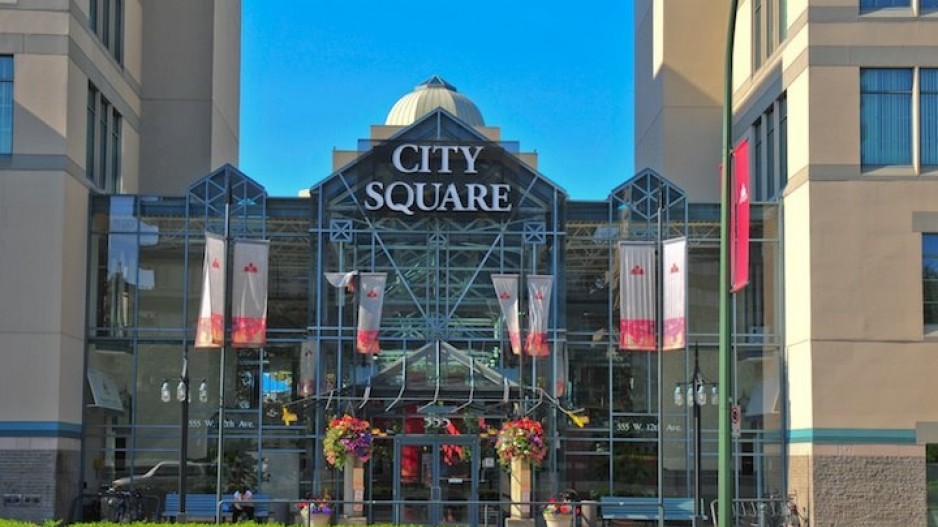
The nearly 250,000-square-foot shopping centre was purchased by Richmond-based Sun Commercial Real Estate Group (Suncom), according to a new retail market report by real estate firm CBRE.
The sales price was more than double its assessed value of $102 million. The 3.3-acre property is located within the Broadway Corridor Plan at 555 West 12th Avenue, just a block from the Canada Line Broadway-City Hall Station and the future Millennium Line Broadway Extension.
The property includes 50 retail units and two six-storey office buildings.
The mall lost its anchor tenant, Safeway, last year. The space has remained vacant since.
Suncom’s holdings include the Best Western Sands Hotel on Davie Street, Westwood Plateau Golf and Country Club in Coquitlam and Mylora Sidaway Golf Club in Richmond.
--BIV
according to Vancouver Couier, The city of Vancouver estimates it will bring in 38 millions from the first year of the empty homes tax---8 millions more than initially predicted.
So far, about 21 millions has been collected. Most of the renevue will be used for affordable houseing initiatives --8 millions has already been allocated. It will cover one-time implementation cost ( 7.5 millions) and first year operating cost ( 2.5 million).
The latest number were revealed in city's first empty homes tax annual report ,which was released Nov 29. In the first year, close to 184,000 declaration were submitted, representing 99% of all residential owners in Vancouver.
Out of total 186,043 properties, 178,120 were occupied, 5385 were exempt and 2538 were vacant.
ALmost every one knows that as a non-resident of Canada, when selling the property in Canada, the seller need to pay tax for the profit. But seldomly aware that as a buyer,If you’re buying a house or condo and you suspect that the current owner from whom you are purchasing the property is a non-resident of Canada, you could be personally liable for the vendor’s Canadian capital gains tax if you don’t take certain precautions.
our Income Tax Act imposes an obligation on the purchaser to withhold 25 per cent of the purchase price from a non-resident unless the vendor has obtained a clearance certificate from the Canada Revenue Agency indicating that the non-resident has made appropriate arrangements to pay the tax.
If the non-resident doesn’t get a certificate, the Canadian resident purchaser is responsible for the 25 per cent tax owing on behalf of the non-resident unless, “after reasonable inquiry the purchaser had no reason to believe that the non-resident person was not resident in Canada.”
很多人都已经知道,如果屋主是非加拿大居民,那么在卖掉物业的时候,房屋的赢利部分需要向加拿大税务局交税,25%的房价会被扣住,除非卖主从税务局获得证书来证明税务已清。但是很多人不知道的是,如果买家没有采取必要的方式确认卖家是否是加拿大居民,那么一但卖主没有付25%的增值税,买家就有可能不得不承担这25%的税,这是多么痛的领悟~~

A new report from Royal LePage suggests the real estate market is going to get crowded in about five years’ time.
According to the The Royal LePage Boomer Trends Survey, 1.4 million baby boomers are expected to buy and sell homes in the next half-decade. However, 9% of boomer parents don’t expect their children to move out before they turn 35—a number that nearly triples in B.C.—and 32% of home-buying boomers will likely opt for a condominium.
“One other thing that stood out in the report to me is 56% of baby boomers believe that where they live today, their local neighbourhood is unaffordable for them for retirement purposes,” said Royal LePage’s President and CEO Phil Soper. “Part of the trigger sending so many baby boomers back into the market is relocation. They’ve indicated that they will relocate from single-family homes to condominiums, to suburban neighbourhoods, and to recreational areas. They’re clearly saying ‘The place that I lived to earn a living and raise children is not the optimal place for semi-retirement or retirement as an empty nester.’”
If boomers do, indeed, flock to condominiums and to the suburbs over the coming years, expect that their interest will be reflected in price points.
“What it will probably do is put price pressure on condominiums and suburban areas with a recreational feel that are within a couple of hours of where they live today, which is within a couple of hours of big cities,” said Soper. “A significant portion wants to live within an hour of where they live today and the next largest group wants to live about two hours away.”
Royal LePage has previously studied what it calls peak millennials, who are between the ages of 25 and 30, and it reckons they’re one the largest demographical cohorts to enter the housing market in Canadian history. Coupled with boomers, there should be no shortage of activity in the real estate market over the next decade.
“We are starting to see the millennials enter the market in a big way. The last few years they’ve been a factor to the point that they are the largest buying demographic now in transactional terms. One of the other interesting pieces from the report, a significant number of baby boomer parents are going to be helping their kids in real estate. I’m a late boomer and I can tell you it was rare when I was in my 20s for parents to play a significant role in kids getting homes, but what we found in this study is 47% are going to subsidize their kids’ home purchases.”
According to The Star Vancouver: In an effort to crack down on tax avoidance, the B.C. government will create a public registry to show who owns real estate in the province.
B.C.’s finance minister says the province has gotten a reputation for being a place to invest anonymously and hide wealth.
“Right now in B.C., real estate investors can hide behind numbered companies, offshore and domestic trusts, and corporations,” said Carole James in a statement. “Ending this type of hidden ownership in real estate will help us fight tax evasion, tax fraud and money laundering.”
In May, the Canada Revenue Agency reported it had identified nearly $600 million in unpaid taxes over the past three years by taking a closer look at Vancouver and Toronto’s real estate markets.
According to BIV,Residential construction all along the Canada rapid transit line is steadily transforming downtown Richmond from a strip of shopping malls into an urban core with cosmopolitan flair. Part and parcel of many developments is space for professional offices.
But most of the new construction has been strata space sold to local owner-occupiers or investors like so many of the surrounding residential units. Mo Yeung International Enterprise Ltd.’s International Trade Centre development at Versante, a mixed-use project with 97,846 square feet of strata office space at 8477 Bridgeport Road, is but the latest case in point.
The situation is about to change, however, with the 343,000 square feet of leasehold office space set to start with completion by the end of 2020. The largest is Yuanheng Holdings Ltd.’s plan for 237,832 square feet of office space at 3311 No. 3 Road, which began the development permit process last year.
An additional 105,420 square feet is proceeding without pre-lease commitments at iFortune Centre, which iFortune Homes Inc. is building at 6860 No. 3 Road. The lack of commitments underscores the tight nature of the market. Avison Young reports that vacancies in Richmond as a whole ended 2017 at less than 10 per cent for the first time in 10 years, but those in the core along No. 3 Road are closer to two per cent.
从一个众多人心目中的食堂和购物街,Richmond已经开始向着城市中心的方向大步的迈进了,2020年底一大型商业租用的楼群在8477 Bridgeport将建成,缓解大批商铺被重建成居民住宅而造成的紧缺。这是过去10年内首次建造的租赁型单位,除本地商户以外,还会有不少被从Downtown挤出来的商户的青睐。3号路沿线目前有6个大型开发项目在进行时,大家喜闻乐见的高楼林立的都市景象即将呈现~~
According to Coast Mountain Roof:
Even the best laid roofs are subject to wear and tear over the years. At some point, you’ll more than likely have to replace the roof of your home. When that time comes, you’ll be faced with the decision of using fiberglass or asphalt (organic) shingles. Being aware of the strengths and weaknesses of each type of roofing option can help you to decide which is the best option for your home.
Asphalt shingles are known to be quite durable as well as relatively affordable, especially compared with other shingle options. Some types can last up to 20 years. They are essentially made from felt or paper soaked in asphalt. The asphalt-soaked paper is then coated with an additional thick layer of asphalt, then a layer of ceramic granules. Because of this, the shingle is waterproof and withstands weather elements very well.
A coating is essentially created which helps protect the shingle from the sun’s harsh UV rays. They are also algae-resistant, as leachable paint is added and the granules form a surface that resists algae growth and discoloration. However, due to its paper content, asphalt shingles are more prone to fire damage than fiberglass.
Fiberglass shingles do contain some asphalt, but less of it than organic shingles. Fiberglass shingles feature a mat that is made of wet fiberglass held together with a urea-formaldehyde resin. The mat is soaked with asphalt filled with mineral fillers, which makes it waterproof.
Due to the absence of paper, fiberglass shingles are more fire resistant than organic asphalt shingles. Fiberglass shingles are actually not very ideal for cold climates, as low temperatures can cause fiberglass to become brittle and prone to breaking. In cold climates, organic asphalt shingles are the better option since they are heavier, more substantial and they perform quite well in cold, windy, frigid climates.
Fiberglass shingles also tend to be the better choice for hot climates due to being flame-retardant and heat-resistant. However, shingles made of fiberglass are rich in alkaline substances which can attract algae, making fiberglass proofs prone to having a dirty appearance. Algae buildup tends to reduce the roof’s ability to have a protective effect against the sun’s harsh rays. The result can be a warmer house, which means higher energy costs to keep it cool.
Its good to know that both shingles look the same. They are both made from asphalt and granules. They are even installed the same way too!. The difference is the layer of glass fiber makes the fiberglass shingle absorb less moisture and is more resistant to heat. Its for these reasons that fiberglass shingles increases durability in warm climates.
Overall, asphalt shingles are among the most affordable roofing options. Organic asphalt shingles can cost half of other roofing alternatives.
沥青片的屋顶已经为人所熟知,另外有一种玻璃纤维的屋顶却很少人知道,从外形上看,这两种叠加型铺设的屋顶片很难区分出来,但是两者的性能还是有不少差异。在不同天气状况下的表现以及抗青苔的能力也不尽相同。
投机税新规
BC财政部长詹家路宣布了新的投机税新规,BC省居民拥有的物业依然维持0。5%,省外居民为1%,外国投资者为2%。 Gulf Islands, Parksville, Qualicum Beach or rural Fraser Valley的物业将不适用此规。
但如下城市适用,
Metro Vancouver, Chilliwack, Abbotsford and Mission (excluding Bowen Island).
The Capital Regional District (excluding the Gulf Islands).
The municipalities of Nanaimo, Lantzville, Kelowna and West Kelowna.
对于物业价值低于40万和有租约且超过6个月的有Tax Credit.
A local real estate leader questions the effectiveness of new provincial measures designed to cool the housing market.
The provincial government last month announced introduction of two new measures: the expansion of the foreign home buyers tax and the introduction of a new speculation tax.
Concerning the first, the provincial government has hiked the buyers’ tax to 20 per cent from 15 per cent, and extended it into the Capital Regional District, including Saanich, along with other areas (Nanaimo, the Fraser Valley and Central Okanagan).
“I don’t think it is too big of a surprise,” said Kyle Kerr, president of the Victoria Real Estate Board (VREB). “I don’t think it’s going to have a significant impact on our market.”
Foreign buyers account for only five per cent of buyers, and Kerr questions whether the higher tax will help increase the supply of affordable housing. “How does less than five per cent of the market drive the other 95 per cent?” he asked.
Concerning the second, the government plans to introduce a tax on empty properties.
The tax starts at 0.5 per cent of the property assessment this spring, eventually hitting two per cent by the end of 2019.
It applies to individuals (foreign citizens and out-of-province Canadians), who own property in British Columbia but do not pay income tax in the province.
“If you pay income tax in British Columbia you are not captured,” Finance Minister Carole James said last month. “If you’re from outside the province, and you leave your home vacant, you will be taxed.”
The government has also promised to “help offset” the tax for B.C. residents. This would leave “the bulk” – but not all – “of the tax levied on vacant and short-term rental properties” owned by individuals who do not live in British Columbia.
Some details about the tax remain outstanding.
The provincial government has also not yet defined “vacant” as it applies to holiday properties, which out-of-province owners may use only a few times each year. Finance officials have said that out-of-province owners can avoid the tax if they rent out their properties on a long-term basis rather than through short-term services such as AirBnB.
“If you want to ensure that you don’t pay the tax, you put your house on the rental market and you encourage people to rent it,” James told reporters after a post-budget speech to business owners in Victoria.
The provincial speculation tax has already caused ripples elsewhere, especially in the Okanagan Valley, where Kelowna Mayor Colin Basran has openly criticized the provincial government.
Kerr, citing this criticism, said the province should have consulted with the industry.
While it is not clear how many residences in Greater Victoria would be subject to the speculation tax, the region is attractive with future retirees, who currently live out of town but have already purchased a second home. “There will be a spectrum of the local market that will be affected,” said Kerr.
So what should the province have done?
Kerr said the key to dealing with the current affordability crisis lies on the supply side and he praises some of the other housing measures and adds the speculation tax could generate revenue towards housing measures. This said, it will take time, and the provincial budget lacks measures to help groups who are struggling to find affordable housing right now.
For example, the province could have worked with municipalities to cut red tape, thereby speeding up housing developments, he said. It could have also instituted measures that would have given groups a break on their property transfer tax.
The province, for example, reduces or eliminates the property transfer tax for first-time buyers, with the full exemption kicking in for properties with a fair market value of less than $500,000. Kerr said the provincial government could have adjusted this exemption threshold by region.
“The government can tax specific regions of the province, why not give them a regional tax break?” he said.
 The data relating to real estate on this website comes in part from the MLS® Reciprocity program of either the Greater Vancouver REALTORS® (GVR), the Fraser Valley Real Estate Board (FVREB) or the Chilliwack and District Real Estate Board (CADREB). Real estate listings held by participating real estate firms are marked with the MLS® logo and detailed information about the listing includes the name of the listing agent. This representation is based in whole or part on data generated by either the GVR, the FVREB or the CADREB which assumes no responsibility for its accuracy. The materials contained on this page may not be reproduced without the express written consent of either the GVR, the FVREB or the CADREB.